In my last post, I basically said the core fundamental skill in business is to be able to run a revenue cycle:
- Spend money to find work
- Spend money to get that work done
- Spend money to deliver that work
- Receive money from clients and
- Reinvest it into step one
Just like horizontal scaling in servers you can scale the number of your cycles (or make the current one bigger). The excess amount you get from each cycle can be used to create another parallel one or upscale the current one. If each cycle gives you a profit of 10%, then running 10 cycles can let you create the 11th cycle. When 100 cycles are running at once, they create 10 cycles at once. You get the point. But basically being able to create this whole cycle from start to end is magic. And to make it run faster or to create parallels of it is even greater magic. Jobs don’t scale because we are not carrying out the 5th step, that is to re-invest into finding more work. We just stay stuck with the same work.
If you can find work faster, then you have made the cycle faster. If you can deliver the work faster, then you have made the cycle faster. If you reduce the time between the work being delivered and payment being received, you have made the cycle fast again. If you reduce the time between reinvestment of the receipt and the time of receipt, then you have made the cycle faster.
What does a faster cycle mean? It means faster creation of surplus. Surplus that can be used to create another cycle. A faster cycle means potential for explosive growth. You can even have a negative cycle by receiving the payment before even completing the work. So you have just spent money to find the work, but you are yet to do the work, so you have some surplus, so you can go and find more work.
The cycle I am describing here are the general laws of business, independent of industry or product.
To make the cycle more potent, you have four levers:
- Increase the amount of inflow
- Decrease the time to inflow
- Decrease the amount of outflow
- Increase the time to outflow
Pooling each one of these levers either results in you receiving the payment early or getting a bigger amount of surplus, which can be used to create bigger cycles or parallel cycles. The levers are both financial and temporal. If it’s achieved by focusing on profit/loss or timing of actions.
Marketing plays the cycle by trying to decrease the amount of outflow while increasing it by getting a lot of purchases done at a lower cost. Venture capital plays the cycle by injecting capital and abnormally increasing the amount of inflow by increasing the amount of outflow on ads. Consultants try to play the cycle by decreasing the time between tasks. But everyone is playing the same game. Everyone’s hands are on the same deck. Knowingly or unknowingly, we are trying to make the cycle stronger.
Traders try to play the cycle by finding opportunities where they are creating value by purchasing something from someone who is desperate to sell at a low price, and selling it at a high price to someone who needs it even more desperately, essentially, their research for the trade is their payment to find work. Then, selling is their delivery of work and receipt of payment. They didn’t create any product or manage any teams, yet they completed the whole revenue cycle which can be reinvested. That’s why it’s a business.
Found work (an opportunity).
Executed it.
Delivered it (by selling).
Got paid.
Reinvested.
That is a complete revenue cycle and completing the cycle is what makes it a business, not the presence of employees, products, offices, or complexity. And that’s exactly why a lot of start-ups are labeled as “unviable business,” basically politely calling them not businesses. Because they cannot complete the cycle. They are not able to find work for themselves, or maybe they are not getting paid enough, or they are not able to re-invest. But they are not completing the cycle. Thus, they are not businesses. The local kebab shop is a business because he is completing the cycle. He will have 3-4 more stalls in the future because he is re-investing.
And even if clowned on, these Instagram gurus are completing the cycle. They are running a business because they do find an audience for their courses, they do work on delivering it, and they do get paid and they reinvest back into the cycle. Their reinvestment often looks like renting Lambos and Penthouses. The cycle quality may be bad, but the cycle is still there.
Thus in life you are rewarded financially if you complete the cycle. That’s all it is – not about your creativity, your talent, your ingenuity, your innovation, your dumbness, your smartness, your ugliness, your good looks. You are rewarded for your ability to complete the cycle.
Everything else is supporting the cycle. Marketing is to help the cycle, Finance is to help the cycle, Logistics is to help the cycle, HR is to help the cycle. Everything is about the cycle. Completing the cycle and spinning it again is all that matters.
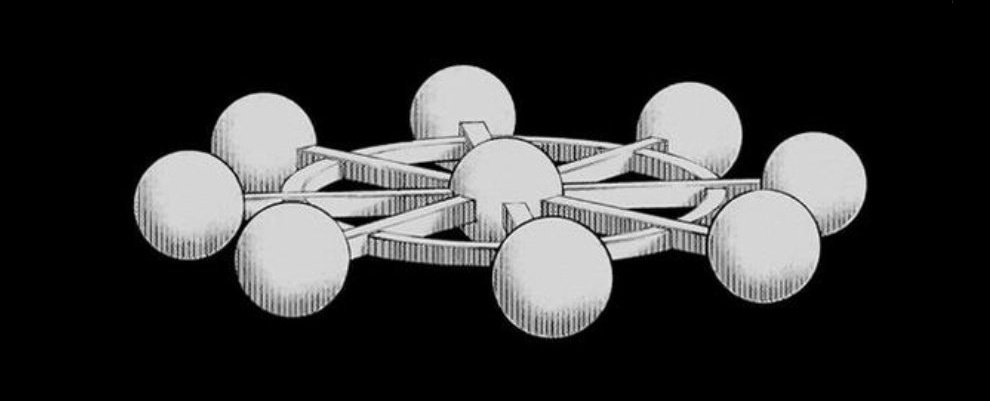
It’s like each business department has its hand behind this great wheel, and they’re trying to push it forward. And it can work better if everyone is pushing in the same direction, and if everyone pushes harder and faster. But if someone is misaligned or pushing from the opposite direction, then the cycle won’t spin well.
So, once again.
- Spend money to find work
- Spend money to get that work done
- Spend money to deliver that work
- Receive money from clients and
- Reinvest it into step one
Money wise:
Creativity only matters if it helps close the loop.
Talent only matters if it helps close the loop.
Innovation only matters if it helps close the loop.
If something doesn’t help close the loop, it does not matter money-wise. It is financially irrelevant.
If the cycle closes, the business lives.
If it closes faster, the business grows.
If it closes with surplus, the business compounds.
If it stops closing, the business dies
The malicious side of this can be to impede the cycles of your competitors. A hopeful way of looking at this can be: “Hey, you might already have ingredients for the cycle. Just have to connect them.” This cycle is the physics of business. The first principle of business, the true first principle.
history is full of cases where competitors or regulators with or without understanding cycles have:
Delay a competitor’s inflow.
Increase their acquisition cost.
Slow their delivery.
Increase their refunds or churn.
Disrupt their reinvestment ability.
How do you create your own revenue cycle?
It all starts with people. You figure out the musings of people or the problems of them. Can you figure out your solution to those musings or problems? Then you find people whom you can give that solution, deliver it, get the money, and reinvest. It starts with the observed reality of you and the person whose problems you are solving. If only you are noticing, then it’s not enough. If only they are noticing, then how are you going to create it? An overlap is necessary. It cannot be imagination alone; it has to be mutual observation. And if there is feelings asymmetry, then even better if the user cares about that problem more than the world does, and you emerge as the person who is solely willing to solve it. That helps with customer acquisition; it helps you to find work.
- Founder curiosity without user pain.
- Or user pain without founder clarity.
Both sides alone are insufficient. Revenue cycle is possible only when you notice it and they feel about the same thing. Once the founder’s curiosity and user pain clarity collide, you have the opportunity to create revenue cycle. Your work becomes to solve that pain, and since you already know about the pain and the person, it is easier to get to them. It is easier to deliver to them and work for them. And then you get paid, woohoo!
But since you made this observation about people and a problem, it means that problem must be present in other people also who are similar to the person you just helped. To earn more, you don’t need to sell to 1,000 different people. You need to sell to that one person type 1,000 times. An example of this can be that you talked with a police officer and created a gun for him that solves its problem. Now, you don’t need to go and create 1000 different pistols to sell to 1000 different people. You can find 1000 other police officers and sell the exact same guns to them. Just by selling to one, you have made a template which can be reused. Humans are not unique snowflakes in operational life. Roles, environments, and constraints shape people into repeatable types. A police officer, a valuation analyst, a restaurant owner, a logistics coordinator — each role produces similar problems across thousands of individuals. When you solve the problem once, you are creating something reproducible. One product for one person type, sold 1000 times, to 1000 different names.
Thus, when you once start this cycle using this process, you can reinvest the money from the first cycle and start taking steps toward running another one in parallel, or making the current one bigger.
So once again, it becomes a people’s game where access to people being able to converse with them or have access to their experiences or knowledge can put you at a huge advantage. If you know about people’s workflow, if you know about their job, if you know how they feel, then you can easily create products as per their musings or problems.
Business is a people game disguised as a product game. Because a closing loop is extracted from people’s lived experience. You are selling to one human pattern, expressed 1000 times.
If you know:
- how a valuation analyst prepares comps
- how a recruiter submits candidates
- how a logistics coordinator tracks shipments
- how a D2C operator reconciles payouts
You can, for sure, create some product for them. Idea stemming from imagination are cheap because you can literally come up with anything. But the thing that can lead to a revenue cycle is inherently rare because it has to be the intersection of what you observe and the user also feels. Its supply is limited, and it can be acquired only via access to people or their experiences in the form of internet posts, books, or some reports. If you already converse with a lot of doctors, investment bankers, lawyers, policemen, dentists, financial analysts, housewives, sports players, school-going kids and traders then you know a lot of their frustrations. You know about their workflows. You can create a revenue cycle using that. This is why communities, jobs, and networks matter.
People → patterns → problems → products → cycles.
It is not about creativity, talent, or innovation. It’s about proximity, understanding, and intuitiveness when it comes to dealing with problems and people.
What can be the secondary sources for tapping into this lived experience?
Reddit posts can be one of the sources. People actually have dedicated servers for a lot of professions.
Another is looking at the job postings, maybe the description can tell us a bit, but of course they lie a lot. But even vague detail can tell us which softwares are being used, what might be the workflow. We can deduce it.
Another is if it requires any professional qualification like CFA or ACCA. Whatever they teach in those professional courses would be what they are doing in their actual profession, right?
We can also maybe look at the ratings they might have left for the applications used in their workflow, exclusively the negative ones, to find out what might be the problem.
ChatGPT is suggesting looking at day-in-life videos, or podcasts, or even court transcripts in case some of them are discussing workflows.
I mean, if we launch a campaign for a certain person and we go through these 5-6 resources, dumping down the data in some text file, and then try to deduce the workflow, I think we can get a fairly good idea – at least 80-90% of it. With the amount of data that is catered around, we can definitely triangulate on high friction issues.
(from GPT)
Why secondary reconstruction works
Workflows are not private.
They are encoded everywhere:
- Job descriptions describe responsibilities.
- Tool docs describe steps.
- Complaints describe friction.
- Tutorials describe execution.
- Reviews describe failure.
- Reports describe expectations.
With your method, you can reconstruct:
- Task sequence
- Tools involved
- Handoffs between roles
- Reconciliation steps
- Reporting obligations
- Bottlenecks
- Failure points
- Manual workarounds
That already covers most product-relevant reality.
What you cannot fully reconstruct:
- Emotional politics
- Power dynamics
- Fear and incentives
- Career risk
- Internal blame paths
But those matter more for selling than for building.